 Post by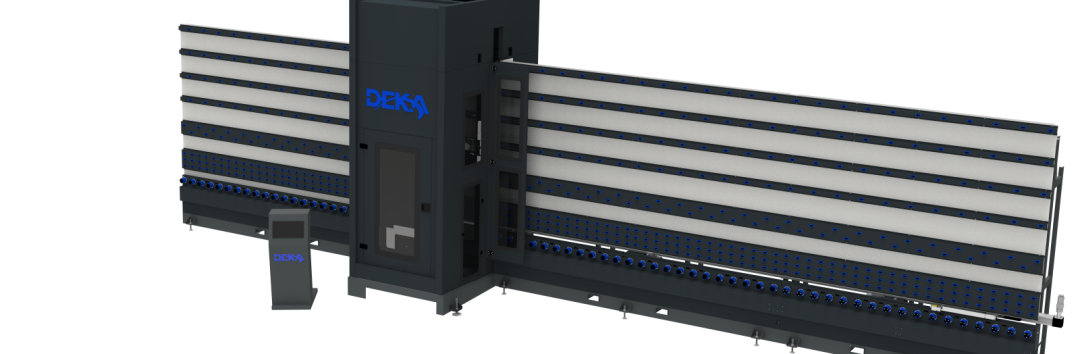
A glass drilling machine is an investment that directly determines your scrap rate. The wrong choice will manifest itself in broken sheets and downtime every shift. In this guide, we'll address the key points you need to clarify before getting a quote.
1. Determine your glass measurement range from both ends.
Most manufacturers only look at the maximum size. However... minimum size It is just as important. If the small parts don't fit into the machine's conveying and holding system, you'll either have to outsource them or process them manually — which eliminates the performance you expect from the machine from the start.
Extract the largest and smallest plate dimensions you processed in the last year from your production records. Include both of these values when requesting a quote.
2. How are thickness transitions managed?
If you are going to process 4 mm thin glass and 19 mm thick glass on the same machine, the critical question is: Does the machine need to stop and adjust with every change in thickness?
In workshops that produce mixed orders, this means dozens of stoppages per day. Machines that can automatically adjust according to thickness are more expensive in terms of initial investment, but they quickly pay for themselves in mixed production. If you are processing a single type of thickness, you don't need to pay for this feature.
3. How many different hole diameters do you use?
This question looks directly at the tool change system. If you have three or four different diameters in your production and the operator changes tools at every pass, calculate the resulting lost time: 5 minutes per pass, 20 passes per day, 22 working days per month — approximately 37 hours per month.
Systems with automatic tool changers (for example) DD6‘The 6+6 turret system (in the original text) eliminates this loss. It is not necessary if you are working with a single turret.
4. Is a countersink needed?
If you are using countersunk connection elements, a countersink is mandatory. The countersink angle and depth must be the same on every part to prevent gaps during installation. Countersinks are standard in shower enclosures, railings, and point-connection facade applications.
5. Which types of glass will you be processing?
Laminated glass, It requires different processing parameters than monolithic glass due to the intervening PVB layer. Low-E coated glassThe coating layer must not be damaged. Shaped glass If you are going to process it, the machine's conveying system needs to support it.
If any of these three are present in your production process, clearly state this during the bidding phase — an added requirement often means a machine change.
6. Alone or in a line?
If the machine is to be integrated into your existing production line, The slowest unit determines the capacity of the entire line.. If your washing unit feeds 3 meters per minute, the benefit of acquiring a drilling machine that processes 5 meters per minute to your line will be limited.
Extract the metering and speed information for your current line; share this information when requesting a quote.
Vertical or horizontal?
This is a separate decision and often depends on the scale. If you are processing large sheets, vertical machines require significantly less workshop space, handling time is shortened because there is no need to lay the glass on the table, and the machine can operate on the same line as washing and grinding units. For small parts and low quantities, the horizontal configuration is still practical.
Information you need to provide when requesting a quote
- Largest and smallest glass dimensions (width × height)
- Glass thickness range
- Hole diameters used and countersink requirements.
- Glass types (plain / shaped / laminated / Low-E)
- Target capacity per day or per shift
- If the line is available: unit sequence and line speed
Once you clarify these six points, the offers you receive will become comparable. Detailed information about glass drilling machines. can or by contacting us Together you can determine the configuration that best suits your production needs.