
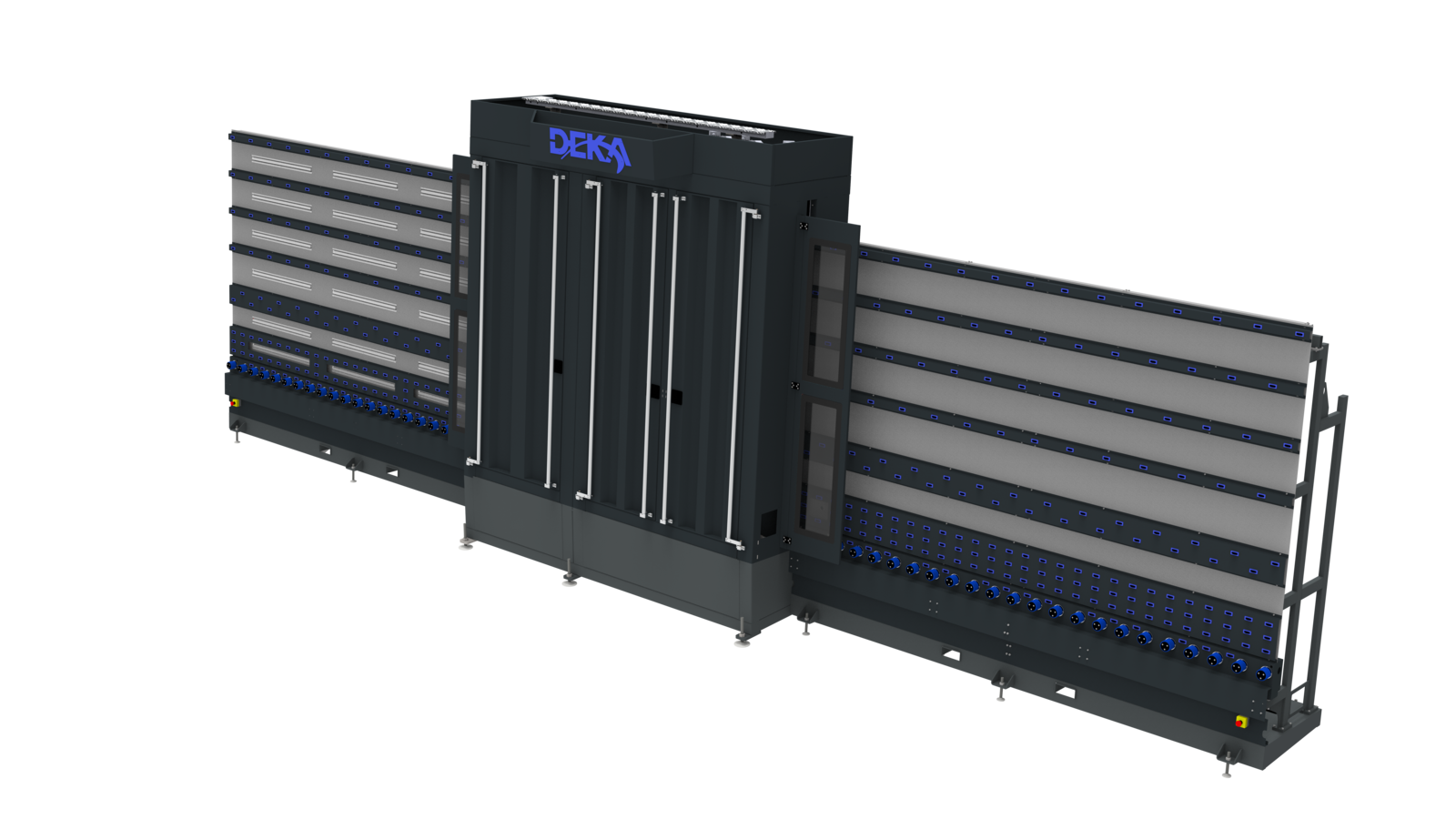
What is a VGWM Window Cleaning Machine and How to Choose One?
Window cleaning machine, It is an industrial unit that removes glass dust, cutting fluid residue, oil, and fingerprints from the surface of flat glass sheets, subsequently delivering the glass completely dry and free of stains. It is located at the entrance of insulating glass joining, coating, lamination production, and tempering lines.
Why is this so critical?
Washing is the quietest but most crucial link in the quality chain. A micron-sized particle remains on the surface:
In insulating glass production This creates a gap between the frame and the glass; over the years, the unit will absorb moisture and fog up from the inside. This means a replacement under warranty for the manufacturer.
In laminated production It forms bubbles between the PVB interlayer and the glass; the part is discarded.
In the coating line It remains as a point where the coating does not adhere, creating a visual defect.
Therefore, what is expected from a washing machine is not "to wet and dry the glass", The goal is to maintain a measurable standard of surface cleanliness in a repeatable manner.
5 key points to consider when choosing
1. Maximum glass height. Does the largest sheet you're processing fit into the machine? This is the first selection criterion for large-format architectural glass. VGWM This series handles glass up to 3300 mm in height.
2. Number of brush groups. The difference between a single brush group and a three-brush group is the difference between a single rinse and a three-stage wash. Pre-washing removes coarse dirt, the main wash cleans the surface, and the rinse removes detergent residue. A three-stage approach is necessary for quality results.
3. Low-E compatibility. Soft-coated Low-E glass is very susceptible to scratches. The machine's brush hardness and pressure setting must be suitable for this glass. If you are working with Low-E glass, this is non-negotiable.
4. Water quality and conditioning. The most overlooked factor determining washing quality is the water. Hard water leaves limescale stains on the glass after drying. In most facilities, a final rinse with demineralized (deionized) water is mandatory.
5. Body material. The machine is constantly in contact with water and detergent. Stainless steel body, It provides a much longer lifespan and corrosion-free operation compared to painted sheet metal bodies.
What to Consider When Washing Low-E Glass?
Low-E (low emission) glass has a metallic coating on its surface that provides heat insulation. This coating comes in two types, and its behavior in terms of cleaning is completely different.
Hard coat Low-E It is durable because it is applied during glass production; it can be processed with standard washing parameters.
Soft coat Low-E However, these glasses are much more delicate. Incorrect brush stiffness, excessive pressure, or dirty water can leave scratches in the coating that are invisible to the naked eye but become visible after installation. Adjustable brush pressure and conditioned water are essential for these glasses.
Additionally, with soft-coated glass, edge deletion of the coating is required at the insulating glass joint — this is a separate process and not a job for the washing machine; it must be considered separately in production planning.
Our Washing Solution
The VGWM series can operate independently or be integrated into the same production line with grinding, drilling, and CNC machining units.
FSR Vertical CNC Glass Processing Center
FSR vertical CNC glass processing center: drilling, milling, grinding and shape cutting in a single machine. Low space requirement and fast preparation thanks to vertical positioning.
FSR Vertical CNC Glass Processing Center
VGWM Vertical Window Washing Machine
VGWM vertical glass cleaning machine: brush configuration for insulated and Low-E glass, demineralized water circuit and drying. Spotless surface for butyl adhesion.
VGWM Vertical Window Washing Machine
DKDT Vertical Glass Grinding and Edge Grinding Machine
DKDT vertical glass edging and grinding machine: edge preparation for pre-tempering, including band, flat, C-shaped, and profile edging. The number of spindles is configured according to your production line.
DKDT Vertical Glass Grinding and Edge Grinding Machine
DD6 Vertical Glass Drilling Machine
DD6 vertical glass drilling machine: drills and countersinks in flat, shaped, and laminated glass. Torque control reduces the risk of cracking and output chipping. Manufactured by Deka Makine.
DD6 Vertical Glass Drilling Machine
Window Cleaning — Frequently Asked Questions
How many brushes should there be?
Is demineralized water necessary?
Do I need a special machine for Low-E glass?
What is the maximum size of glass that can be cleaned?
Can the washing machine operate on the same line as the other machines?
Technical and Service
Does it include installation and operator training?
How does after-sales technical support work?
What maintenance do I need to do?
How long does it take to get spare parts?
Does the glass come out completely dry after drying?
Get a quote for a window cleaning machine.
Share your maximum glass dimensions, thickness range, whether you're using Low-E glass, and your daily capacity; let's determine the appropriate VGWM configuration together.