 Post by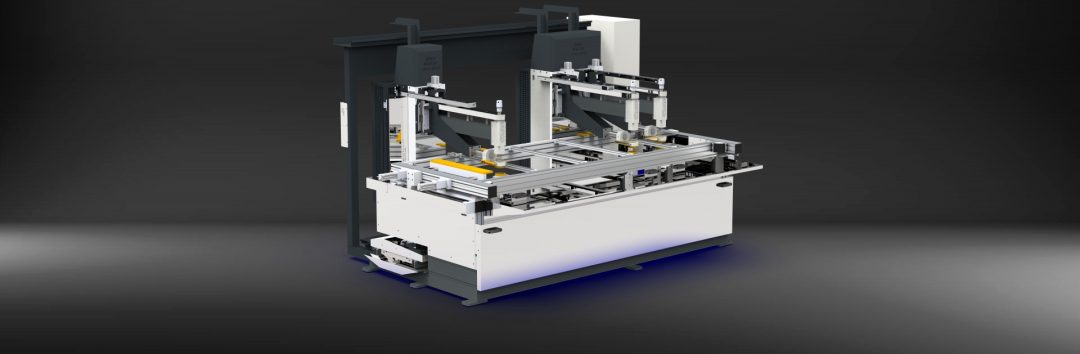
The most fundamental decision in glass processing machinery investment is often the least discussed: machine glass. Will it be held vertically or horizontally? This choice will affect your workshop layout, labor costs, and scrap rate for the next decade.
The main difference
Horizontal machines The glass is laid flat on a table. The glass is secured with vacuum pads, and the process is performed from above.
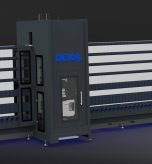
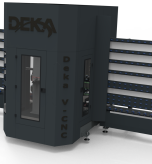
Vertical machines It holds the glass in a slightly inclined, upright position. The glass moves along a support at the bottom, supported from above.
1. Workshop area
This is the most visible difference. If you are processing a 3000 × 2000 mm glass plate horizontally, the machine table must be at least that size — plus operator access and entry/exit clearance. If the same plate is in a vertical position, it will only occupy a one-meter wide aisle.
In organized industrial zones where rental costs are high, this difference can offset the difference in machinery prices within a few years.
2. Handling time and labor
In horizontal machines, there are two extra movements for each sheet: lifting the glass, laying it on the table, and lifting it back into the vertical storage once the process is complete. For large-format glass sheets, this means a job for two people or a crane.
In a vertical machine, the glass is already stored and processed in a vertical position — there are no intermediate tilting steps. The larger the glass, the more noticeable the difference.
3. Risk of fracture
A significant portion of glass shards are not broken during the process, during handling Yes, that's right. Every lifting and lowering movement carries a risk. Since the number of these movements is reduced on vertical lines, the resulting waste also decreases.
4. Line integration — the key factor.
This is often the sole factor determining the decision. Glass processing lines are naturally vertical: washing machines wash the glass vertically, insulating glass joining lines join the glass vertically, and glass is mostly fed vertically into the tempering furnace.
When you install a horizontal machine on your line, you need one in front of and one behind that station. turning You would create additional steps. These steps take up space, consume time, and make automation more difficult.
Vertical machines, on the other hand washing, running in, drilling And CNC machining The units can be arranged directly inline.
When are horizontal machines advantageous?
Vertical is not always the right answer. Horizontal configuration is superior in the following cases:
- Small parts: The conveyor system of vertical machines cannot fall below a certain minimum size.
- Complex internal emptying: If large openings are to be made in the center of the plate, a horizontal table will prevent the part from falling.
- Low-volume, varied jobs: Horizontal tables are more flexible when producing individual, custom pieces in glass workshops.
- Glass that is too thick or too heavy: Vertical support becomes difficult above certain thicknesses.
Comparison table
| Criterion | Vertical | Horizontal |
|---|---|---|
| Workshop area | Little | A lot |
| Large plate handling | Easy | Difficult |
| Small piece | Annoyed | Good |
| Line integration | Directly | Translation is required. |
| Complex internal emptying | Annoyed | Good |
Three questions for the decision.
- What size range do most of the glass I work with fall within?
- Will this machine operate independently or will it be integrated into an existing line?
- How much free space do I have in my workshop, and what is the cost of that space?
For mass production of insulated glass and tempering facilities, the answer is generally vertical. For custom-made glass workshops, horizontal is still a strong option.
If you are unsure which one is suitable for your production, Please share your glass dimensions and design with us. — Let's evaluate it together.